
Sell Your Sawdust: Getting More Out of Every Shoot, Event, and Install
Most projects produce more than the deliverable. A practical guide to finding the unused footage, systems, and knowledge in every shoot, event, and AV installation.
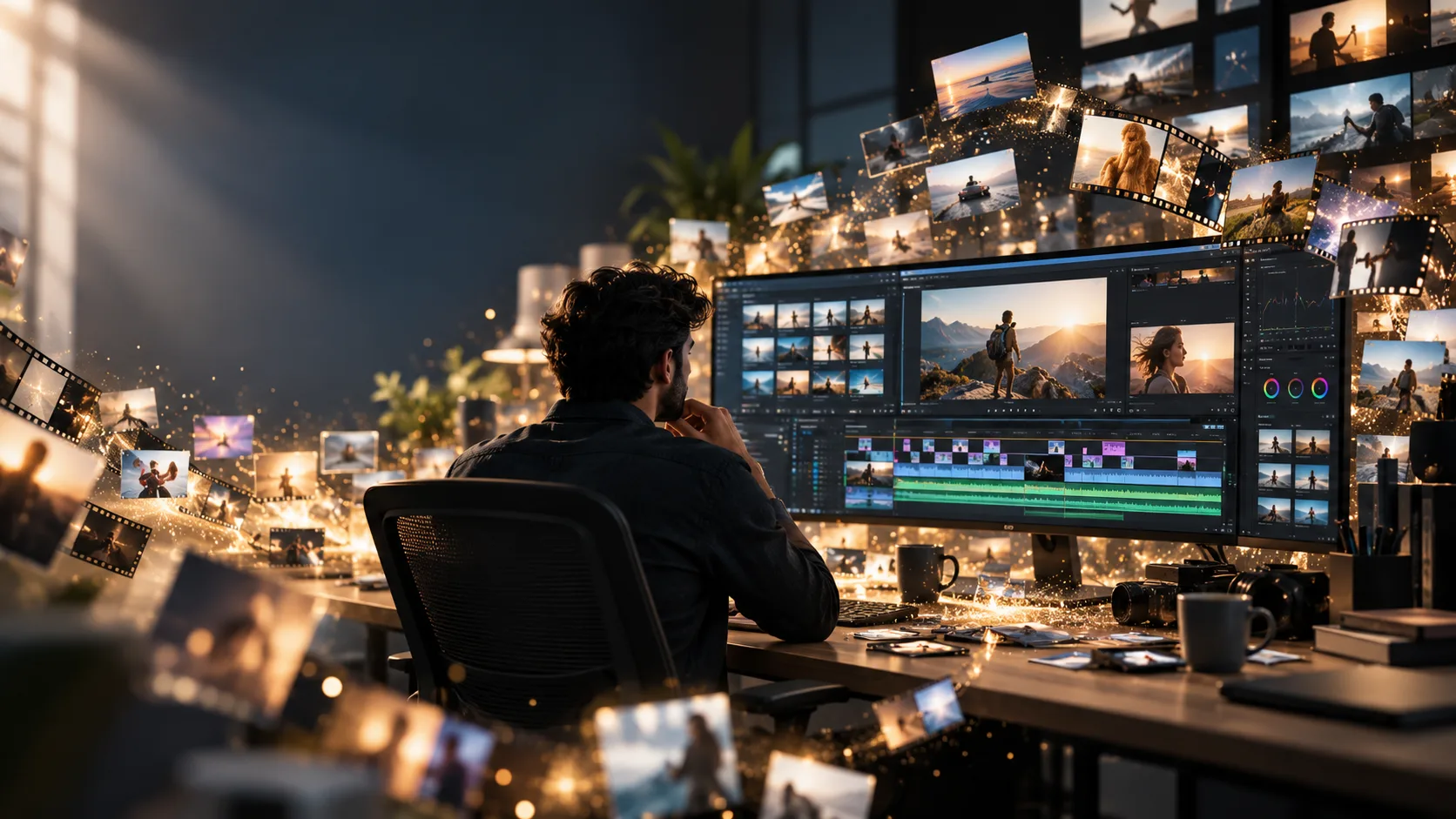 Cover Image
The sawmill problem
For most of their history, sawmills paid to get rid of sawdust. It piled up on the floor, it was a fire hazard, and it was nobody's product. Then someone noticed that the same pile could be pressed into particle board, bagged as animal bedding, or compressed into fuel pellets. The mill didn't cut one more tree. It just stopped sweeping money out the back door.
In agency circles this idea has a name: the Sawdust Principle. Every business creates byproducts while doing its core work, and most of those byproducts are worth something if you catch them before they hit the floor. We've spent 21 years producing video, live events, and AV installations across South Florida, and we've watched a lot of sawdust get swept out. This post is about catching it, both on our side of the camera and on yours.
What sawdust looks like in production work
A video shoot, a live event, or an AV install is built to produce one thing: the deliverable the client asked for. Everything else created along the way is sawdust. It tends to fall into three piles:
- Content that didn't make the cut. B-roll, alternate takes, the 40 minutes of keynote wrapped around a 90-second highlight, the full interview behind a single testimonial quote.
- Systems you built to do the job. Call sheets, run-of-show templates, storyboards, shot lists, and checklists that have been refined over hundreds of projects.
- Knowledge you picked up on site. How a venue's power is laid out, what a city's broadcast standards require, which microphone actually works in a reverberant council chamber.
None of that was the job. All of it has value to someone, as long as a person decides to keep it, organize it, and put it to work. The rest of this post walks through where the biggest piles are in each kind of project we do.
Video production: one shoot, a quarter of content
A shoot day is expensive. Crew, gear, location, talent, and travel are all committed whether you walk away with one deliverable or ten. The sawdust on a shoot is the difference between those two numbers.
Run a second camera on the crew, not the subject. A phone on a clamp or an ambient camera in the corner, recording load-in, lighting setups, the slate, and the director giving notes. It costs almost nothing to add. For a brand, that footage is the kind of unpolished behind-the-scenes content that outperforms the finished spot on Reels, TikTok, and Shorts. For us, it shows how we work better than any case study.
Keep the interview, not just the quote. A 90-second testimonial usually comes from 20 to 30 minutes of raw conversation. Inside that are a dozen short, self-contained answers that work as standalone social clips, pull quotes for a web page, and clean audio for a podcast segment. One afternoon with a customer can feed a channel for months.
Build a B-roll library and treat it like an asset. Every shoot leaves clean footage on the floor: exteriors, drone passes, product close-ups, people working. Tagged by subject, location, and look, that library makes the next project cheaper. A company that does two or three videos with us often finds the fourth needs a half day instead of a full one, because the establishing shots already exist.
Your process documents are products too. Creative briefs, storyboards, call sheets, and production sheets get sharpened every time they're used. Freelancers and in-house teams pay for exactly that kind of template. Strip the client details and the document you already have becomes a lead magnet or a small revenue line.
Live events and streaming: the biggest pile in the building
An event is the most sawdust-dense thing a company does. A full day of speakers, panels, product reveals, and conversations, all lit, mic'd, and recorded, and most of it is seen once, live, and then forgotten. Here's what's usually left on the floor when the trucks pull out:
- Session recordings that become an on-demand library, gated as a lead magnet or used to train the employees who couldn't attend.
- The keynote, which contains 10 to 15 short clips that can carry a social calendar for the following quarter.
- Attendee and speaker testimonials. A roaming camera and a quiet corner with a backdrop will capture a dozen one-minute testimonials in a day, which is next year's registration campaign.
- The live stream archive, which is already the VOD. The clean multitrack audio underneath it is a season of podcast episodes.
- Sponsor activation footage, which is the single best tool for getting a sponsor to renew.
- Photography of the room, the stage, and the crowd, which fills the annual report, the recruiting page, and the next proposal deck.
- The run of show and production paperwork, which becomes the template that saves weeks of planning next year.
The catch is that none of this happens by accident. A camera operator assigned to behind-the-scenes and testimonials, a separate clean audio feed, and a photo shot list all have to be in the plan before load-in. That's a small line in the budget at the planning stage, and it turns a one-day event into a year of content.
AV installations and government: sawdust you're already paying to keep
On the install side, every project produces documentation: system drawings, wiring diagrams, programming files, equipment lists. Most of it goes into a folder and stays there. Turned the other way, the same material becomes a short training video for the staff who will actually use the room, which cuts the support calls that follow every new system. It becomes a case study with photos that both the integrator and the client can use. And it becomes institutional memory, so the people who inherit that conference room in five years know what's in the wall. If you're the client, ask for as-built documentation and a user training video as deliverables. They're sawdust to the install crew and gold to whoever runs the room next.
On the government side, the pile is even bigger, and it's already being collected. Commission meetings are recorded for compliance, streamed live, and archived. A three-hour meeting contains a four-minute explanation of a new stormwater fee, a park renovation, or a change to trash pickup, which is the four minutes residents actually need to see. Clip it, caption it, and post it, and the meeting you were required to record becomes the communication you wanted to send anyway.
The same goes for ribbon cuttings, public workshops, and community events. A city that keeps and tags the footage from its own events builds a library that feeds the next campaign, the state of the city address, the recruiting video, and the annual report, without a new shoot each time.
How to start: a 30-minute sawdust audit
You don't need a content strategy to begin. You need a list and one decision.
- Pull your last five projects. Shoots, events, installs, campaigns, whatever your business does. For each one, write down what was delivered and what was created but never delivered.
- Sort the leftovers into three piles. Content (footage, photos, audio, data), systems (templates, checklists, documents), and knowledge (what you learned about a venue, a process, or an audience).
- Ask two questions of each item. Who would want this? What would it cost to make it usable? Stripping client data from a template is an hour. Cutting a keynote into clips is a day.
- Pick one thing to package in the next 30 days. One, not ten. A B-roll library, a template download, a clip series from the archive.
- Change the capture plan for the next project. Add the second camera, the testimonial corner, or the clean audio feed to the budget now, so sawdust gets collected on purpose instead of discovered later.
Catch it before it hits the floor
The sawmill didn't change what it made. It changed what it kept. Your next shoot, event, or install is going to generate sawdust no matter what. The only question is whether there's a plan to catch it.
If you're planning a project and want to build that plan in from the start, with the second camera, the testimonial corner, and a clip strategy for the archive, we're glad to talk it through. No pitch, no pressure, just a conversation about what winning looks like for you and how much more one project can produce. Reach out to the Full Moon Creative team and we'll start there.